Protein has become the hero of every food label, and for good reason. Many of us, especially vegetarians, don't eat enough of it. But here's what we tell our clients every week: Protein is important. Protein alone is only half the story. The real magic happens when protein and fibre show up together, on a real plate of real food.
Why protein matters
Protein is the building material for your muscles, hormones, enzymes, skin, hair and immunity. It also:
Keeps you full for longer
Helps protect muscle while you lose weight
Supports healthy metabolism as you age
Reduces the urge to snack constantly
The challenge for many Indian homes is that our plates are cereal heavy. ICMR NIN's 2024 dietary guidelines note that cereals often make up 50 70% of daily energy intake, well above what is recommended, while pulses, vegetables and other protein sources fall short.
Why fibre matters just as much
Fibre is protein's quiet partner. It:
- Slows down how fast sugar enters your blood
- Adds volume to meals so you feel satisfied
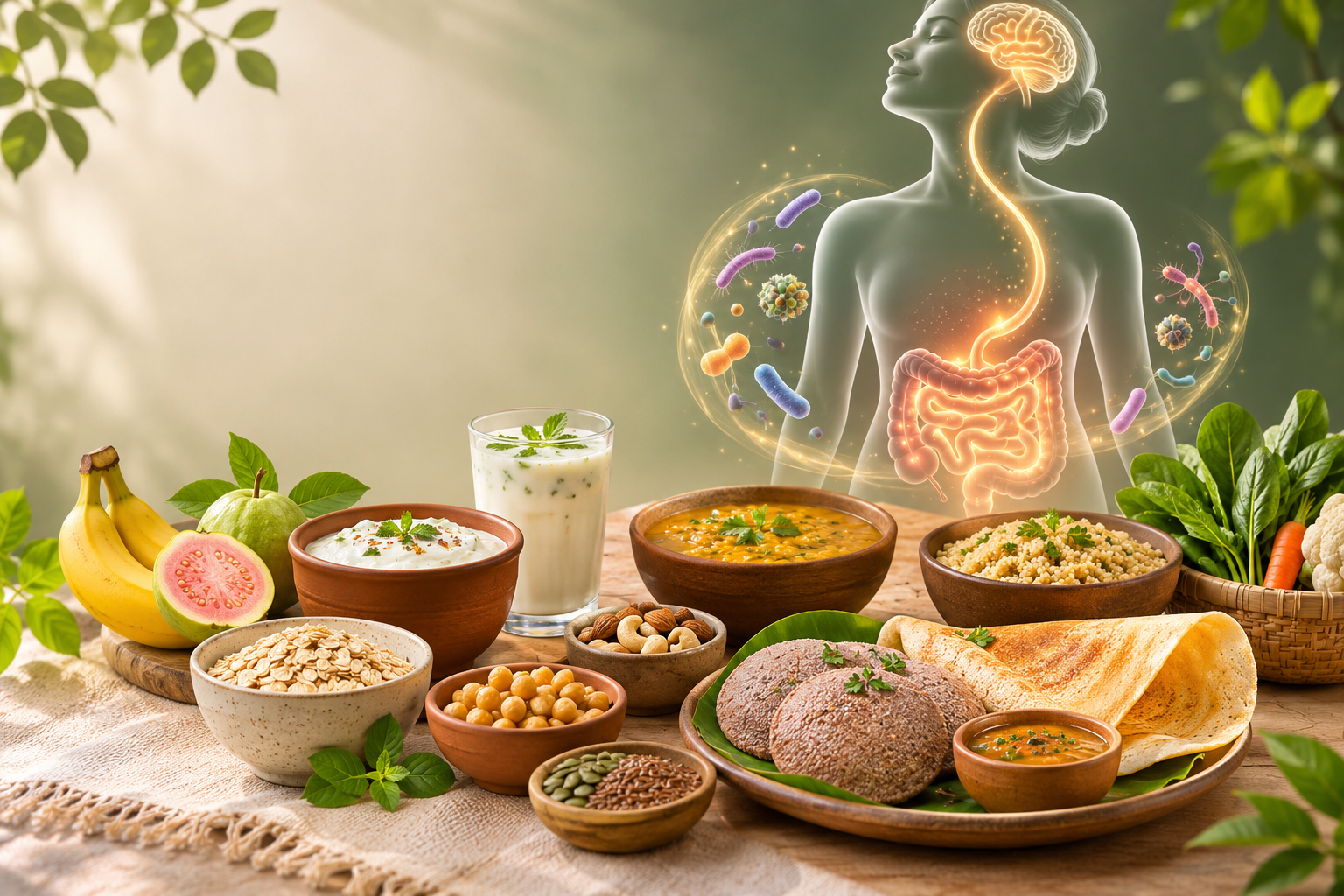
- Feeds the good bacteria in your gut
- Supports healthy cholesterol and regular digestion
The power of the pair
When protein and fibre come together in a meal, digestion slows down, blood sugar rises gently instead of spiking, and fullness lasts longer. That means fewer energy crashes, fewer 4 pm cravings and better portion control without forcing it.
For anyone managing PCOS, insulin resistance, thyroid concerns or weight, this pairing is one of the simplest and most powerful habits you can build.
What about protein powders?
We're not anti supplement, but we are pro food.
India's Dietary Guidelines for Indians (2024) advise against relying on high amounts of protein from supplement powders and note that most people, including most athletes, can meet their needs through well planned meals.
A protein shake gives you protein. A plate of dal, vegetables, millet and curd gives you protein, fibre, vitamins, minerals, antioxidants and food for your gut.
That said, supplements can have a place for some people: older adults with small appetites, people with very high requirements, or those eating very little for medical reasons. In those cases, choose a third party tested product and use it under professional guidance, as a top up rather than a meal replacement.
How much protein do you need?
For most healthy Indian adults, the baseline is roughly 0.8 1 g of protein per kg of body weight per day. Needs go up with strength training, pregnancy and breastfeeding, ageing, recovery from illness and active weight loss.
This is exactly why we personalise. Two women of the same weight can have very different needs depending on their health, activity and goals.
The NutriNest plate
A simple way to balance every meal:
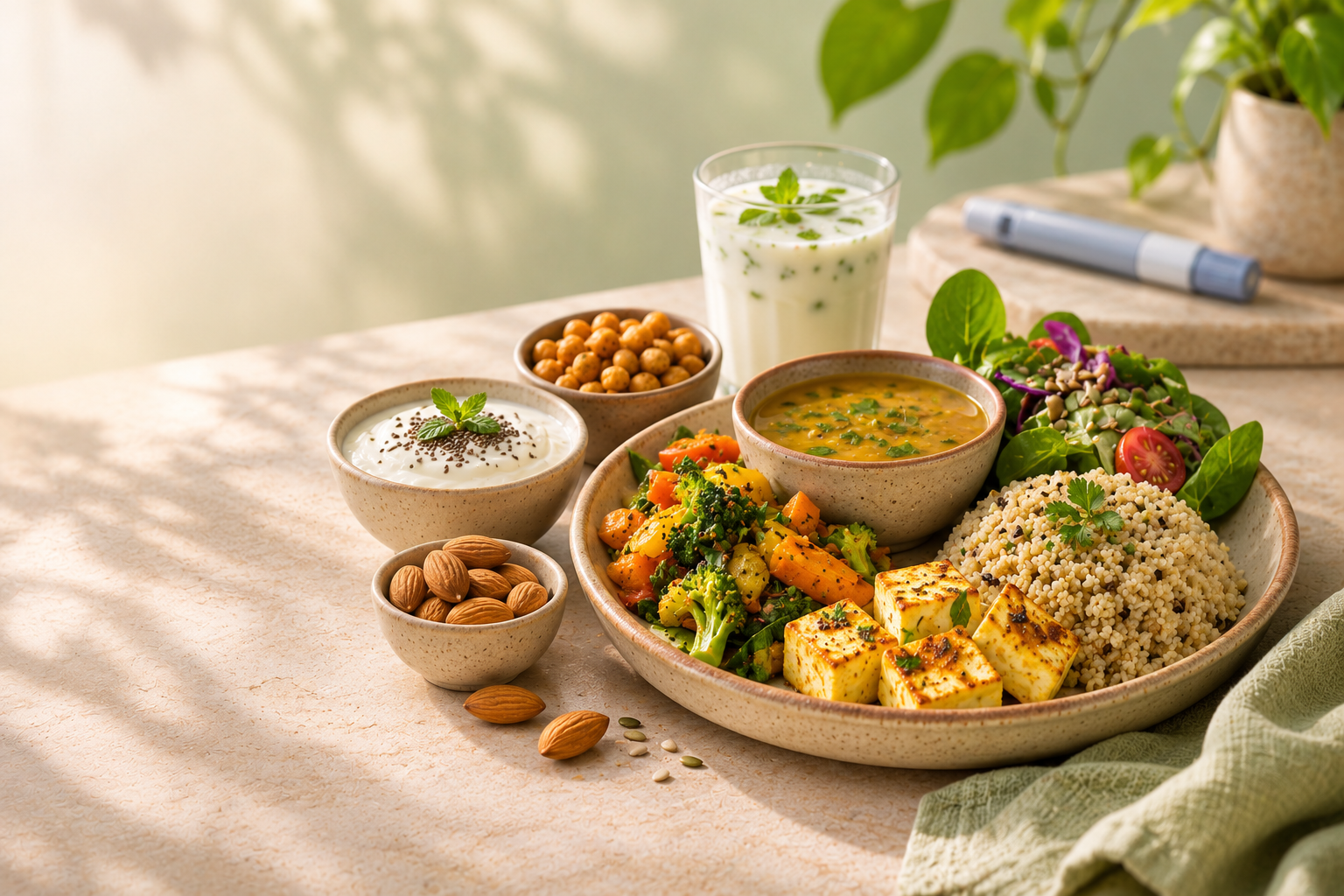
- ½ plate: vegetables and greens (fibre, vitamins, minerals)
- ¼ plate: protein (dal, legumes, paneer, tofu, curd, eggs, fish, chicken)
- ¼ plate: whole grains or millets (ragi, jowar, bajra, brown or hand pounded rice, whole wheat)
- Plus: a small amount of healthy fat, such as nuts, seeds or a little ghee
Protein + fibre pairings for every meal
| Meal | Vegetarian ideas | Non vegetarian ideas |
|---|---|---|
| Breakfast | Moong dal chilla or pesarattu with vegetables; ragi idli with sambar; besan chilla with curd | Vegetable omelette with multigrain toast; egg bhurji with a jowar roti |
| Lunch | Rajma or chana with palya and millet; dal, sabzi, roti and curd | Fish curry with vegetables and red rice; chicken with salad and roti |
| Snack | Roasted chana with guava; sprouts chaat; buttermilk with a few nuts | Boiled eggs with cucumber and carrot sticks |
| Dinner | Paneer or tofu bhurji with vegetables and jowar roti; millet moong khichdi | Grilled chicken or fish with sautéed vegetables |
Common mistakes we see
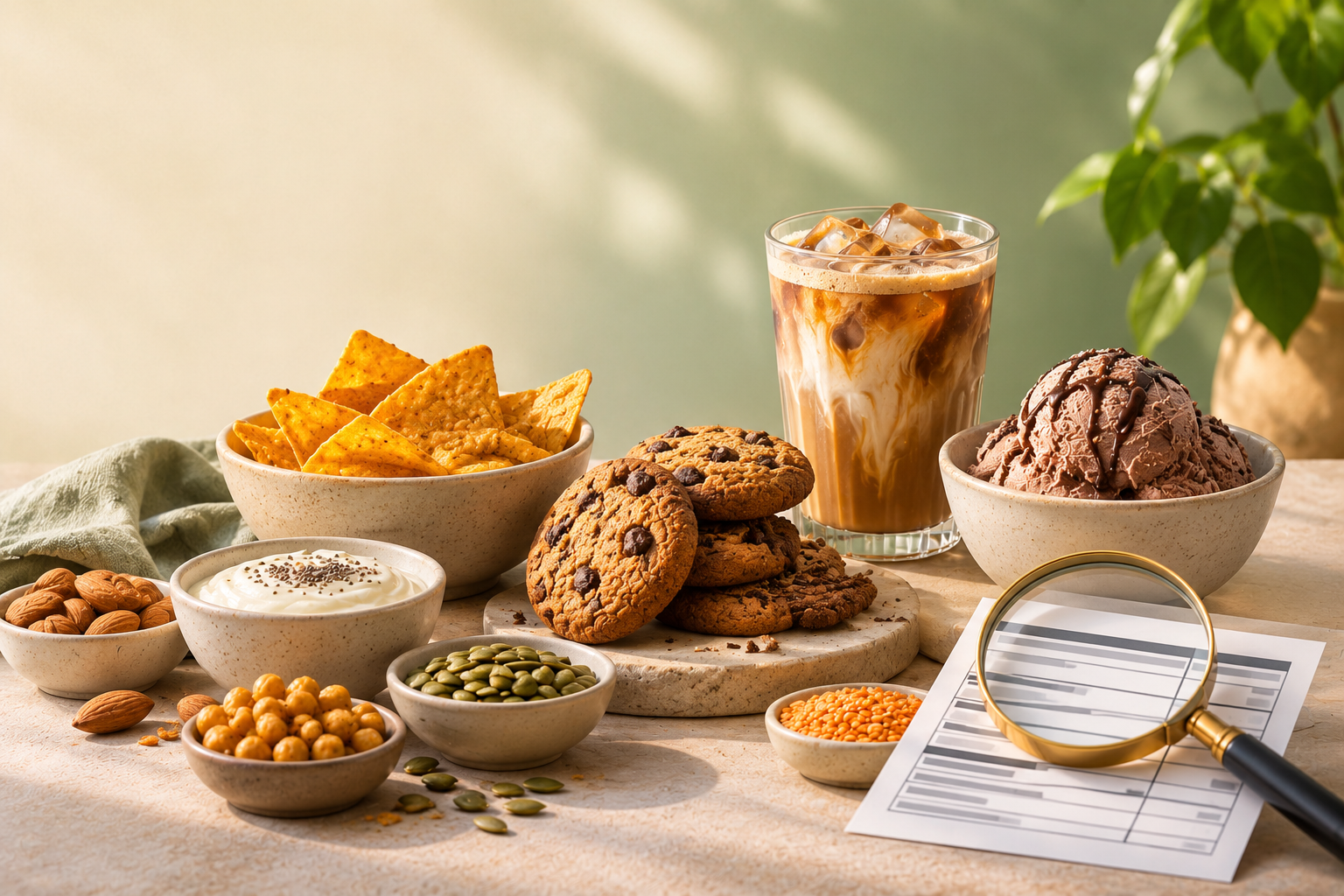
- Treating protein bars as meals. Many are high in sugar and low in fibre. Read the label.
- Relying only on paneer. Rotate dals, legumes, soya, curd, nuts and seeds for variety.
- Skipping vegetables to "make room" for protein. You need both.
- Loading protein into one meal. Spread it across breakfast, lunch, snacks and dinner.